He left us master works such as The Last Supper and Mona Lisa. His intricate, ahead-of-his time thinking influenced the worlds of art, science and engineering. But at the heart of this Renaissance rock star was someone intensely human. 573 years after his birth, here are seven stories to celebrate the man behind the legendary genius.
1. He was an illegitimate child
The Italian region of Tuscany is dotted with hill towns, and, about 30 miles west of Florence, Anchiano is one of them. This hamlet, a few kilometers from the larger comune of Vinci, and classically Tuscan with its stone structures, soft grassy hills, and graceful olive trees, is the birthplace of one of the Renaissance’s favorite sons.
Leonardo was born on April 15, 1452 to 16-year-old Caterina and 26-year-old Ser Piero da Vinci. Piero, like several of the men in his family before him, was a notary, an honorable position involving the writing of legal contracts, and wills, and correspondence. Little is known about Caterina but what is known is that she and Piero were unmarried; speculation places her as one of the family’s servants.
While having consequences later in life, a non legittimo baby in this region and at this time in history wasn’t such a big deal, and it was characteristic for the child to be raised in the father’s household. Leonardo’s father would go on to Florence shortly after his firstborn’s birth, to wed a more suitable bride. Caterina would soon marry as well, with more children in her future. Leonardo would spend his childhood as the beloved first grandchild in his grandfather’s home.
Children born out of wedlock might be barred from certain trades and would likely not inherit titles or land, all which would prove to be the case with Leonardo. Ultimately, being kept from the family business would leave an indelible mark on Leonardo, and the wider world.
As a non legittimo, Leonardo was banned from the Guild of Judges and Notaries, and thus, could not join the family business, breaking the line of five generations of men before him who worked as notaries. He could, however, eventually join the guild which included painters, the same governing body which included doctors and apothecaries (Arte dei Medici e Speziali), categorized as such because painters obtained their pigments from apothecaries.
Although Leonardo’s father would come to play a key role in launching his artistic career, in the end he would omit his firstborn from his will, leaving his estate only to his legitimate children: nine sons and two daughters.

Image credit: Roland Arhelger, CC BY-SA 4.0 https://creativecommons.org/licenses/by-sa/4.0, via Wikimedia Commons
2. Early and auspicious beginnings
Leonardo spent his childhood years in his grandfather’s home in the Tuscany countryside, but when Leonardo was a young teen, his grandfather died. Leonardo went to Florence to live with his father, whose star as a notary was rising. Ser Piero was working for the powerful Cosimo de’ Medici, and would soon become the official notary for the Podestà, essentially the district attorney for the republic of Florence.
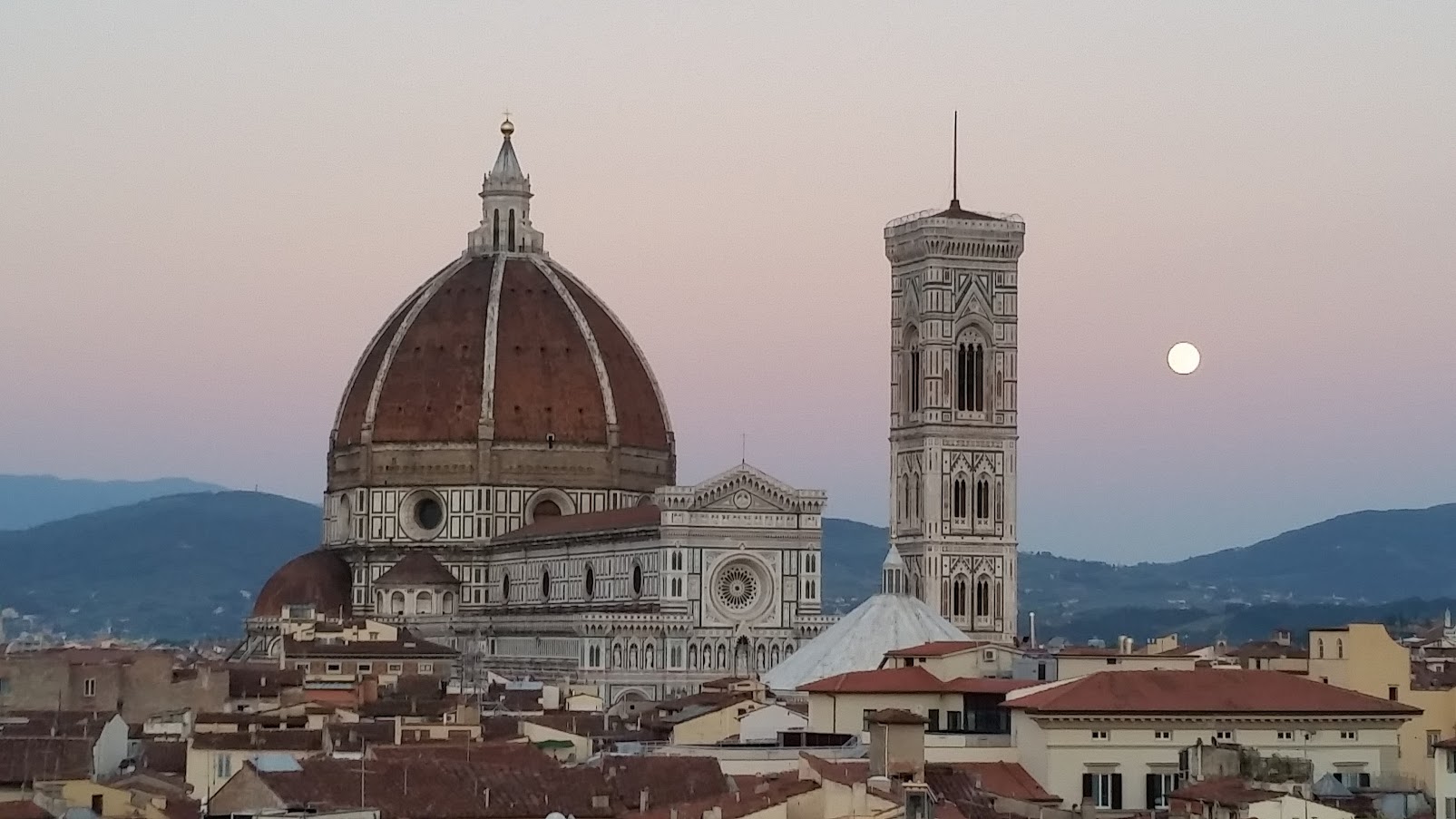
Noticing the sketches Leonardo made in his spare time, Piero introduced his son to one of his artsy notary clients: Andrea del Verrocchio. Verrocchio was a master sculptor, goldsmith and artist, and took Leonardo into his studio as an apprentice. This was about the same time as Verrocchio’s work caught the eye of the ruling Medici family, which, very simply, was a proverbial golden ticket for artists at the time. Leonardo would hone his artistic skills with his mentor for nearly ten years, learning the intricacies of the trade, assisting with commissioned sculptures and paintings, and even participating in the design and placement of the golden ball that today graces the top of Florence’s famous Duomo, the cathedral of Santa Maria del Fiore.
3. Sketching History
Speaking of those drawings…
The earliest work that can be directly attributed to Leonardo is one of his drawings. He completed it in August of 1473 when he was twenty one, and in addition to being Leonardo’s first official piece, it’s also credited as the first landscape in Western art, more specifically, the first work in Italian art known to recreate an actual section of landscape in drawing form.
Titled “Landscape Drawing for Santa Maria Della Neve” it is a detailed rendering of the Arno River Valley, depicting the landscape of Leonardo’s childhood wanderings. This sketch is now safeguarded by Florence’s Uffizi Gallery in Florence.
On the back of this sketch, young Leonardo wrote sono chontento. I am happy.

4. The human man
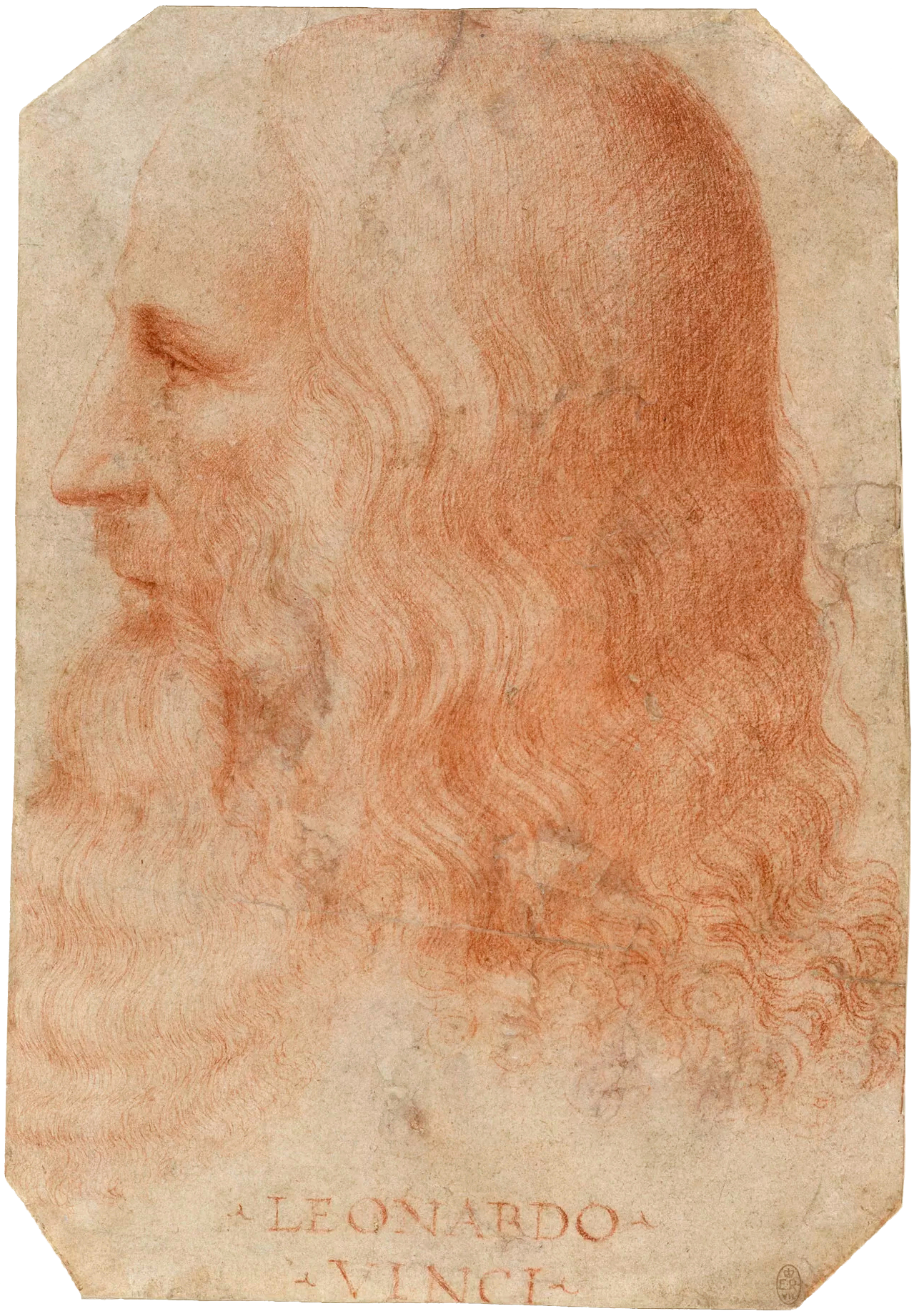
The image I hold of Leonardo in my mind comes from one of his few self-portraits, completed late in life and depicting, well, a man of a certain age. Long wavy hair and beard (grey?) but also balding, deep crow’s feet lining his eyes, intense, rough-looking eyebrows, an expression somewhere between melancholy and grumpy.
But his early biographers paint a different picture, noting that he was of “outstanding physical beauty,” with “long hair, long eyelashes, a very long beard, and a true nobility.”
Giorgio Vasari, regarded as the father of art history, wrote that Leonardo “displayed a great physical beauty, which has never been sufficiently praised,” and further He noted that Leonardo “stole everyone’s heart.”
One person’s heart he did not steal was Michelango, younger than Leonardo by about twenty years but whose celebrity in the art world was rising quickly. The historical record shows the two men clashed, but the record also confirms Michelango as a bit prickly.
In a culture where conformity was more the norm, Leonardo broke tradition in a couple of ways. He was naturally left-handed (and ambidextrous), and was a vegetarian on principle.
He was both horrified at the mistreatment of animals, and confounded that humans sustained life at the cost of lives of other living creatures. Thus, he was a vegetarian. In his libretti, the little notebooks he kept throughout his life, were recorded grocery lists, including items such as bread, wine, mushrooms, chickpeas. “Does nature not produce enough simple food to satisfy you?” he noted.

Above, Leonardo’s possible self-portrait. Below, a more flattering (more accurate?) rendering done by his longtime assistant, Francesco Melzi.
5. Driven by curiosity, not formal education
Although trained as an artist under Verrocchio, Leonardo was formally educated in nothing. Still, he is considered one of the most notable polymaths in history.
Defined as someone with a wide-range of knowledge which extends across many subjects and disciplines, famous polymaths include Isaac Newton, Benjamin Franklin, Alan Turing, and, without a doubt, Leonardo da Vinci. In modern terms, polymaths may be described as a “Renaissance Man” — a term coined in the early 1900s to describe someone with intense curiosity and imagination — with Leonardo considered the quintessential Renaissance Man.
Leonardo regarded mechanical science as a most noble discipline, and, driven by his tireless curiosity, was self-taught in a wide range of fields: anatomy and medicine, engineering and architecture, mathematics, astronomy.
“As a boy in Vinci, Leonardo would have learned to read and write Italian, memorized long sections of the Bible and Dante’s Divine Comedy, and studied the fundamentals of math and science,” writes Dianne Hales, in her meticulously researched book Mona Lisa: A Life Discovered. “However, he never mastered Latin, the hallmark of a well-educated Renaissance man, nor did he learn to write with his right hand, as a tutor would have demanded of a left-handed pupil.”
It is curious that he never became fully fluent in Latin, a language that was expected for learned men at the time. In his notebooks, he recorded Latin terms and practiced verb conjugations. “Even as Leonardo neared age forty, he was still working at conjugations, copying ‘amo, amas, amat‘ as diligently as a schoolboy,” notes Hales.
The 15-year Italian language learner in me feels strangely comforted by this fact.
6. He carried Mona Lisa for the rest of his life
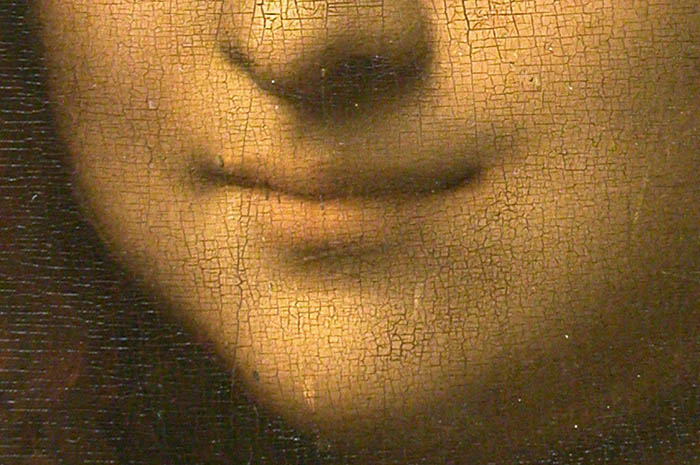
Leonardo was in his early fifties when commissioned to paint the portrait of Lisa Gherardini, wife of wealthy Florentine silk merchant Francesco del Giocondo. Despite working on it for the few years he was to remain in Florence, the portrait was never given over to Lisa, nor to the del Giocondo family. Leonardo kept it with him for the rest of his life, transporting it from Florence to Milan, then to Rome and ultimately France, where he would die in 1519 at the age of 67 years old. Each time he packed his belongings and moved himself and his possessions to a new court or city, La Gioconda, as the portrait is known in Italian, was with him.
Leonardo may have considered it unfinished, tinkering with it here and there throughout the years. He was plagued with a reputation for not finishing commissions, for abandoning projects in progress as other opportunities arose.
Following his death in France on May 2, 1519, the portrait was inherited by Leonardo’s assistant Salai, who then sold the painting to the King of France, Francis I, who, in turn, hung it in his bathroom. A few hundred years later, it would hang in Napoleon’s bedroom, before ultimately finding its current home at the Louvre in Paris.
7. The Ultimate Perfectionist?
Leonardo’s biggest fundamental asset may well have also been his greatest drawback: a quest for perfection. He was notorious for leaving projects unfinished or abandoned entirely, likely due to the high standards he set for himself, or for the sheer complicated visions his vivid mind could dream up.
An entry in one of Leonardo’s notebook reads, “St. Andrew’s night. I am through with squaring the circle, and this is the end of the light, and of the night, and of the paper I was working on.”
“In his imaginations,” the art historian Vasari explains, ‘he frequently formed enterprises so difficult and so subtle that they could not be entirely realized and worthily executed by human hands.'”
One piece Leonardo did carry to completion, that, miraculously, we can still view today despite being the path of World War II bombs, is his masterwork The Last Supper. Filling the wall of what once was the refectory of Milan’s Santa Maria delle Grazie church, The Last Supper was completed by Leonardo in 1498, after three years of work.
“Coming in the midst of so much derelection and neglect, The Last Supper was the triumphant discharge of the debt that his genius owed to history,” writes historian Ross King, in his detailed study Leonardo and The Last Supper. “Over the course of three years he managed — almost for the only time in his life — to harness and concentrate his relentless energies and restless obsessions. The result was 450 square feet of pigment and plaster, and a work of art utterly unlike anything ever seen before — and something unquestionably superior to the efforts of even the greatest masters of the previous century.”
Still, Leonardo’s words and wonderings are left behind in his notebooks: “I wish to work miracles,” and, “tell me if anything was ever done.”

Sources
For deeper reading, I recommend the two sources I consulted while writing this article. They are highly readable, deeply researched works, and I am grateful to the authors for putting these works into the world. Images via author websites


 Prayers & Piazzas