The first time I spotted a trullo, I expected a little gnome, pointy red hat and all, to come tiptoeing around the side of its rounded stone walls. The trulli seemed to pop up, out of the golden fields, like some ancient harvest.

Here in Puglia, a province in the heel of the Italian boot, I was already feeling like a character out of a fairy tale. The granddaughter of an Italian immigrant, I had brought my family to our ancestral home, to connect with cugini, the descendants of the sisters who had remained in Italy while their five brothers (one of them being my grandfather) crossed the ocean to live forever in America.
Puglia is a storybook. Wide open fields, gnarled and wise olive trees, golden light dusting the earth on a warm summer evening. Even though we were racing along the highway in a car built for six but crammed tight with ten of us, I could feel that we were approaching something special.
My cugino had called Alberobello “one of the most magical places in the world”, and coming towards it as we were, stretches of vast land dotted with the occasional surprise of a trullo, I had to agree.
Funny story, though. I thought we were going to the “land of the beautiful hotel”. My embryonic Italian brain often confused albero (tree) with albergo (hotel), and thus translated Alberobello as beautiful hotel. I was really close, as the correct and literal meaning of Alberobello is beautiful tree.
What is a Trullo?
In the land of the beautiful (olive) trees lies another beautiful treasure: the trullo.
Derived from the Greek word for cupola, a trullo is small, rounded stone hut from days gone by, constructed of limestone gathered from local fields. In the outskirts, the trulli blend with the land, built of stone in muted, earthy colors and entwined with overgrowth and weeds. Once in Alberobello, the trulli are breathtaking, with their whitewashed walls and conical roofs of grey stacked stone emblazoned with white mystical symbols, put there centuries ago to protect inhabitants.
Spotting one for the first time is unmistakable. The feeling of being plopped straight into a fairytale made me go all tingly inside.

History has it that these clever structures were designed “to fiddle taxes and fool the authorities,” notes Italy Heaven. Made completely from stone and without mortar, a trullo could be dismantled in a hurry, like perhaps, when there was talk of the tax collector’s arrival.
“To wiggle around laws and taxes, it was important that Alberobello didn’t class as an inhabited settlement.” How do you make a town look uninhabited, when in reality, people are living there full-time, actively working the land? Simple: a town full of trulli, which could be dismantled quickly (and must have looked like a heap of rubble), and then easily re-assembled once the tax collector left town. No homes, no settlement, no tax payment required.
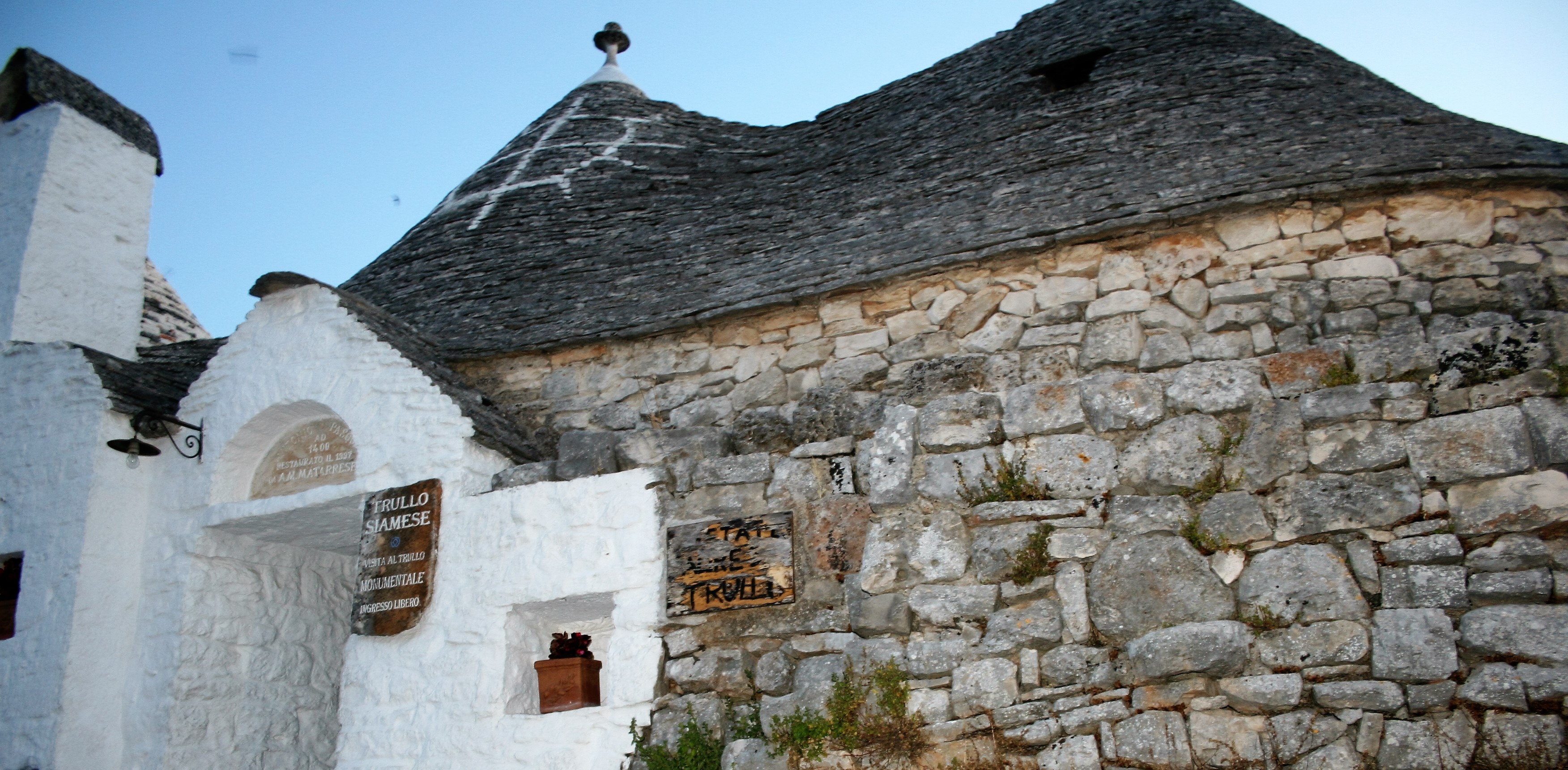
Trulli can be found in many areas of Puglia, but they are most numerous in Alberobello, where you can dine, shop, worship or even stay in a trullo. Most notable is the two-story Trullo Sovrano, and Trullo Siamese (above), Alberobello’s oldest trullo structure dating back to the 15th century. In 1996, Alberobello’s trulli were categorized as a UNESCO World Heritage Site. (That makes 58 for Italy, the country with the most designations in the world, if you’re tracking this at home…)
Keeping Busy in Alberobello
My favorite ways to keep busy in Italy are very simple: wandering the cobblestone streets, popping into the local church, eating a slow meal with a glass of vino rosso. My time in Alberobello was open and unstructured, and mostly just one long passeggiata (leisurely stroll) through town.
Sites to see include the trullo Siamese, the Chiesa San Antonio di Padova, (Church of St. Anthony) built in the traditional trullo style, and the town’s main square, Piazza del Popolo. For some pre-planning before arriving to Alberobello, Virtual Tourist has a comprehensive list of things to do. Or, make the tourist office your first stop in town, located at Via Regata Regina.
Nearby Excursions
Puglia is home to some spectacular towns, with Alberbello central to many. Being with family, we traveled by car, but Alberobello does have a train station, and most cities in Italy are accessible to each other if not by rail, then by bus. Please research before you travel if you will not have your own car.
If your time in Puglia allows for some town-hopping, I highly recommend the following:
Polignano a Mare
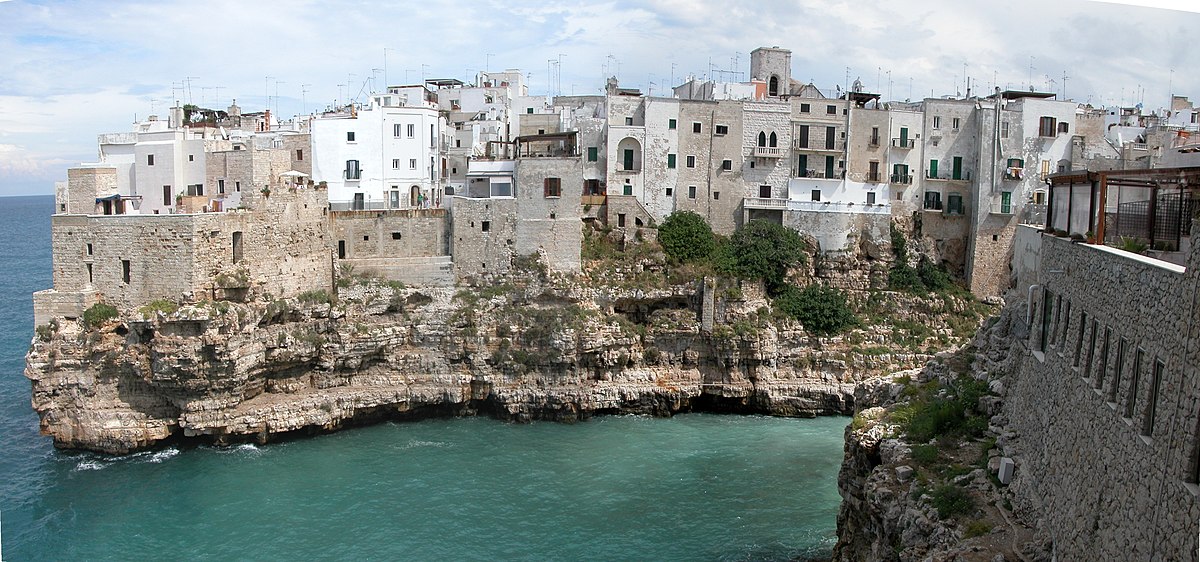
Polignano a Mare is a gorgeous cliffside town overlooking the Adriatic Sea, where you can dine and even sleep in a cave. It’s 29 km from Alberobello, or about 35 minutes by car.
Conversano

Photogenic Conversano is featuring work by renowned Italian artist Giorgio di Chirico through October 23, 2016. Conversano is 25 km from Alberobello or about 30 minutes by car.
Ostuni
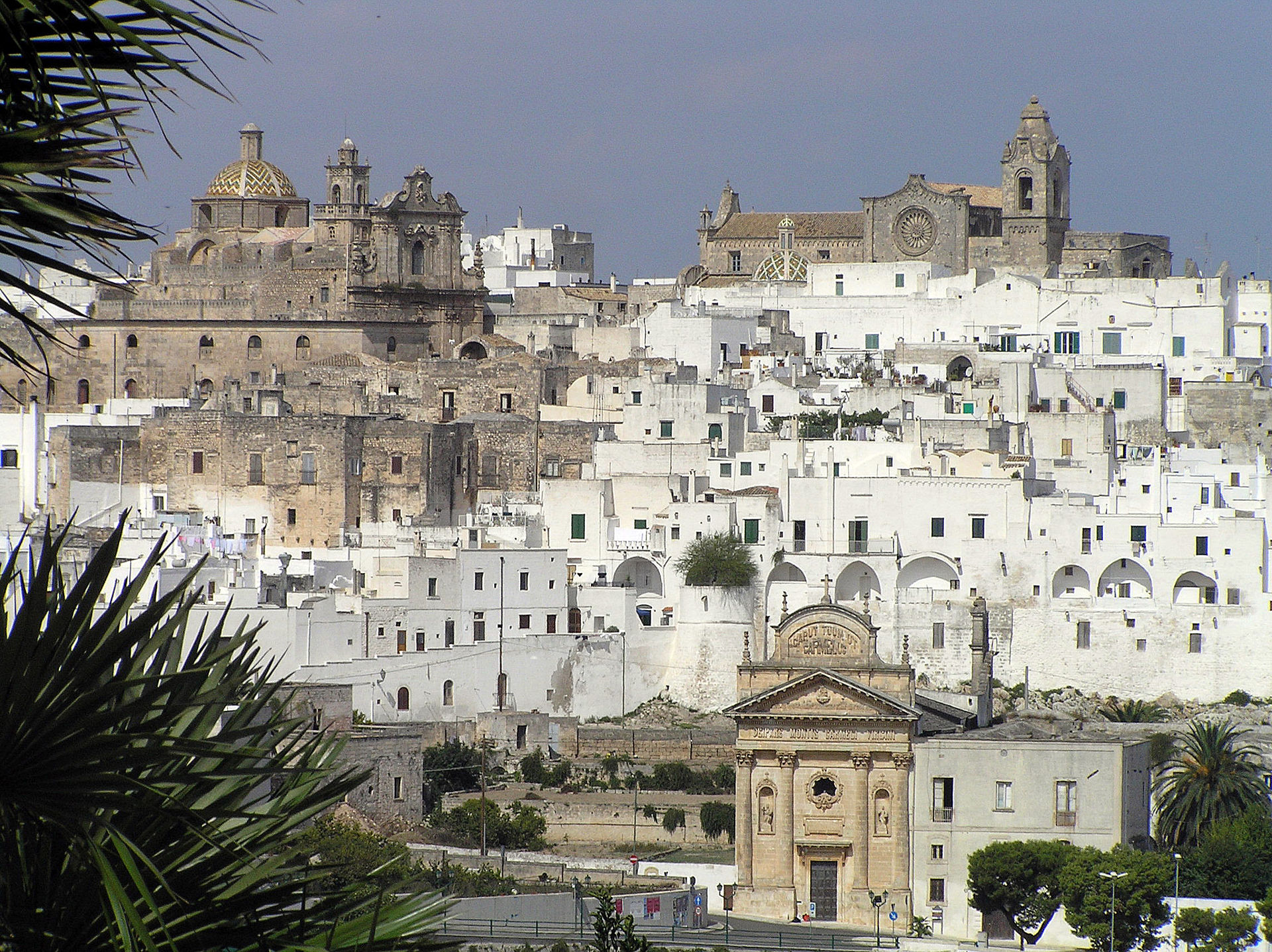
Stunning Ostuni, “the White Town” (still on my wish list), is located 46 km from Alberobello, or 45 minutes by car.
Lecce

Lecce has been called “the Florence of the South”, and it definitely is worth a visit to this baroque town. It’s 113 km from Alberobello, or about 1.5 hours by car.
References:
Virtual Tourist,Italy Heaven, Understanding Italy, Trulli Puglia, Wikipedia, UNESCO
Image credits:
Photo 1: Trullo with Rainbow via Wikimedia Commons
Photo 2: Trulli of Alberobello via Wikipedia
Photo 3: Trullo Siamese by Stacy Pollard
Photo 4: Polignano a Mare via Wikipedia
Photo 5: Conversano by Stacy Pollard
Photo 6: Ostuni via Wikipedia
Photo 7: of Lecce by Stacy Pollard
 Prayers & Piazzas

.jpg)

I came late to this post; even now, though, it makes me want to visit. Although I do wonder what they did with the furniture they had when they dismantled the homes… otherwise an interesting idea and very Italian!
Alberobello is magical, especially on a sunny day. Whenever I’ve been there, I keep hearing ‘la la, la la la la’ in my head and expect ‘I puffi’-the Smurfs-to come dancing by. Ciao, Cristina
Lovely and interesting
Sent from my iPhone
<
div dir=”ltr”>
<
blockquote type=”cite”>
Thank you!